Traditional Braces for Kids: Functional Bite Over Cosmetics
Traditional Braces for Kids in Coeur d'Alene
For some kids, the most important thing braces do has nothing to do with how their smile looks in a photo. It's how they chew, speak, and breathe. Dr. John and the team at Pediatric Dental Center of North Idaho treat braces as a working tool first, and before anyone reaches for brackets, we look at the bite, the airway, and how your child's jaw is growing.
Traditional braces handle the jobs other options aren't designed for: real bite correction, jaw alignment, and stubborn spacing that needs steady, precise force over many months. When your child's situation calls for that kind of control, braces are often the most conservative path to a result that actually holds. If you're wondering whether your child needs them, call us at (208) 667-3556 for an evaluation that looks at the whole child.
Quick Takeaways
- Braces correct complex bite and jaw problems that clear aligners aren't made to handle.
- When you hear any recommendation, ask how it affects your child's bite and breathing, not only the look of their smile.
- A first orthodontic check around age 7 catches developing patterns early, once enough permanent teeth have come in.
- You'll get a realistic timeline after a full evaluation, never a guess off the cuff.
- The next step is a consultation that weighs teeth, jaw, and airway together.
How Braces Treatment Goes, Step by Step
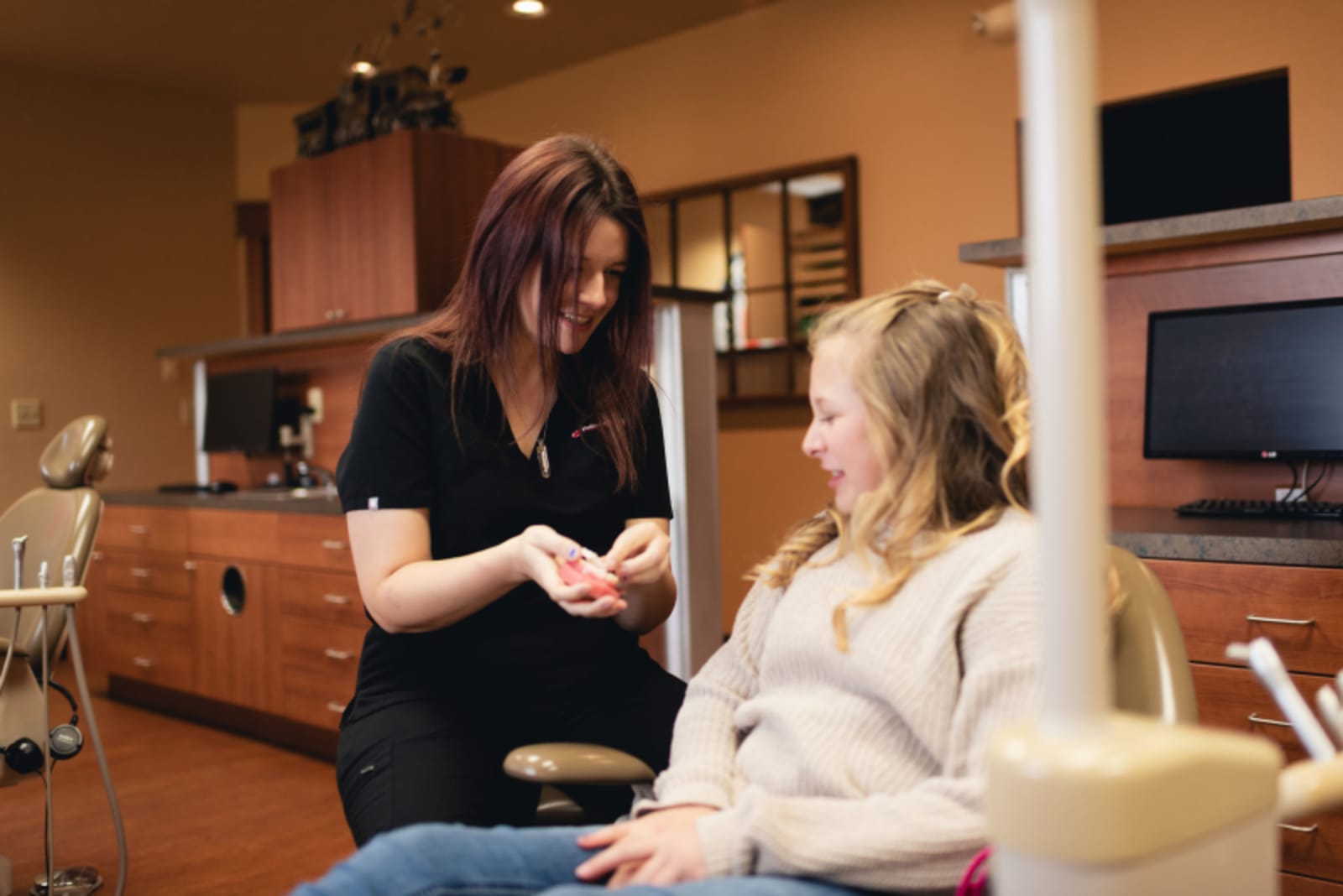
- The evaluation. We take a close look at your child's teeth, jaw position, bite, and how the jaw relates to the airway. Bring your questions; this is where we explain what we're seeing and why it matters.
- Records and planning. Using imaging and records, we form the full picture, then design the plan around how the bite should function, working back toward arch development and tooth movement.
- Bonding day. The brackets go on. A little tenderness in the first day or two is normal, and we'll show your family easy ways to ease it at home.
- Adjustment visits. Short check-ins keep things moving, and you'll always know how progress is tracking.
- Retainers. Once the braces come off, retainer wear protects what we worked toward, especially when bite or breathing was part of the original concern.
What Your Child Actually Gains
Treatment planned around function gives your child far more than a nice photo:
- A bite that works. Better alignment makes everyday eating and talking easier and more comfortable.
- Room for a growing airway. We factor in how the jaw is developing and how that affects breathing, which ties into how kids sleep, focus, and feel.
- Precise correction. Fixed braces let us control exactly how each tooth moves — rotations, vertical shifts, and crowding that need careful precision to fix.
- Results that last. When the early work is right, the outcome tends to stay put for the long run.
- A confident smile, too. Appearance matters; it's just never the whole story.
Which Kids Are the Best Fit?
Because pediatric dentistry and orthodontic care live under one roof here, your child's plan reflects the whole child rather than one isolated problem. For some kids that points clearly toward traditional braces over aligners, especially when a bite issue needs to be fully resolved instead of gently nudged.
Braces tend to be the stronger choice when a child has:
- Significant crowding that needs careful sequencing to sort out
- Bite problems tied to jaw position, not just tooth alignment
- Teeth that need rotation or precise vertical movement
- Developing airway concerns where jaw position plays a role
And some kids simply aren't ready yet. When watchful waiting makes more sense, we'll say so plainly. For simpler situations, clear aligners can be a good fit if your child will wear them consistently. We'll walk you through where your child genuinely lands instead of steering everyone down the same road.
How Long Treatment Takes
Timelines vary, and two things move them most: how complex the correction is, and how consistently your child keeps up with wear and care. As a rough guide, a straightforward case often runs about 12 to 18 months. Airway and bite concerns that have been forming over years can take 24 months or more.
The work isn't finished the day the braces come off. The retainer phase holds the functional result in place, and skipping it is where good outcomes quietly slip backward.
Getting Ready and Caring for Braces
Before bonding day, plan on soft foods for the first couple of days and pull together a small kit: orthodontic wax for any pokey spots and a kid-friendly pain reliever for normal tenderness. If your child plays a contact sport, let us know so we can fit a proper mouthguard. Kids who play wind instruments usually settle in within a few weeks.
Once the braces are on, daily habits matter more than ever:
- Brush after meals, since brackets give plaque more places to hide
- Floss with the tools we'll show your family how to use
- Skip sticky, hard, and chewy foods that can pop a bracket loose
- Keep adjustment visits so progress stays on schedule
We coach every family through the details at our regular pediatric dental visits, so kids head home knowing exactly what to do.
Cost, Insurance, and Financing
Cost depends on how complex your child's needs are, how many visits are involved, and which path best fits their development. There's no fair way to put a single number on a webpage without seeing your child first.
Many dental plans include orthodontic or pediatric benefits that can ease the overall cost. We'll review your coverage at the consultation so you know where you stand, and if out-of-pocket spending is a worry, financing can spread payments over time. You'll have a clear treatment estimate before any work begins.
Why Families Across North Idaho Choose Us

Dr. John is a second-generation pediatric dentist here in North Idaho, with over 20 years of experience, board certification from the American Board of Pediatric Dentistry, and advanced training in growth, development, and airway-related concerns. He's also a member of the Spokane Cleft Palate Team.
Our orthodontic care runs on an airway-centered philosophy, so the goal was never just a straighter smile. It's a functional bite, room to breathe, and a jaw that supports healthy development. That resonates with families who've raised questions about their child's sleep, breathing, or bite and felt brushed off elsewhere.
A few things parents mention most:
- A conservative approach that doesn't rush to intervene before the timing is right
- Pediatric-specific expertise behind every orthodontic decision
- A warm, kid-friendly office where children genuinely relax
- Plain talk that leaves you informed, never pressured
You'll find this same care at our Coeur d'Alene office, serving families throughout North Idaho and the Spokane area.
Common Questions from Parents
My child is 7. Is it too early to think about braces?
Seven is the right age for a first orthodontic check, not because treatment usually starts then, but because enough permanent teeth have come in to spot developing patterns. Catching things early often means simpler treatment later.
How do traditional braces compare to clear aligners for kids?
The trade-off mostly comes down to what their bite needs and how daily life works. Aligners can gently nudge simpler cases into place, but they rely on your child wearing the trays consistently and not losing them. Fixed braces apply steady force to fully correct complex bites, and they stay put without that daily responsibility. Think honestly about your child's routines, and we'll help you weigh that against what their bite actually calls for.
Will braces fix my child's bite, or just straighten their teeth?
Both, and the bite is often the more important half. A well-aligned bite shapes how your child eats, talks, and breathes at night, which is why we look at the full picture.
What if my child plays sports or an instrument?
Sports are fine with a properly fitted mouthguard, and we'll handle that part. Most kids who play wind instruments adjust within a few weeks. Just mention it at your visit so we can plan around it.
Do retainers really matter after the braces come off?
They really do. Retainers hold the functional result in place, especially for kids whose bite or breathing was part of the original concern. Skipping them is where results drift back.
Ready to Find Out If Braces Are Right for Your Child?
An evaluation is the natural next step. You'll get a real picture of where your child's teeth, jaw, and airway development stand, with no pressure to move forward before you're ready. Call us at (208) 667-3556 to set up a consultation, and see what to expect on your first visit. Come with your questions, and leave with clarity.
Connect with us
Call 208.667.3556 or request an appointment online to set up your first visit. We’ll be in touch soon.