Airway-Centered Orthodontics for Kids: Breathing Before Braces
Airway-Centered Orthodontics for Kids in Coeur d'Alene
You probably noticed it before anyone else did. Your child sleeps with their mouth open, snores most nights, or wakes up foggy no matter how early bedtime was. Airway-centered orthodontics asks why that's happening before it worries about how straight the teeth are. At Pediatric Dental Center of North Idaho, Dr. John and our team start with how your child breathes, then look at the jaw, the width of the palate, and how the face is growing. For most kids, that means catching things while the jaw is still growing and easy to guide gently.
There's a real window in the early school years that quietly narrows as your child gets older. If any of this sounds like your house, call us at (208) 667-3556 and we'll set up an airway-focused evaluation. We welcome families at 1717 Lincoln Way, Suite 205 in Coeur d'Alene.
Quick Takeaways
- Breathing leads the way. We look at the airway and jaw development before anyone mentions brackets.
- Earlier is gentler. Around ages 6 to 7 is a good time for a first look, while growth is still on your side.
- Know the signs to mention. Mouth breathing, snoring, restless sleep, crowded teeth, and trouble focusing are all worth raising.
- Ask for the "why." A good evaluation explains what's driving the crowding, not just that it's there.
- The first step is small. An airway-focused evaluation tells you exactly where your child stands, with no pressure attached.
How an Airway-First Evaluation Works
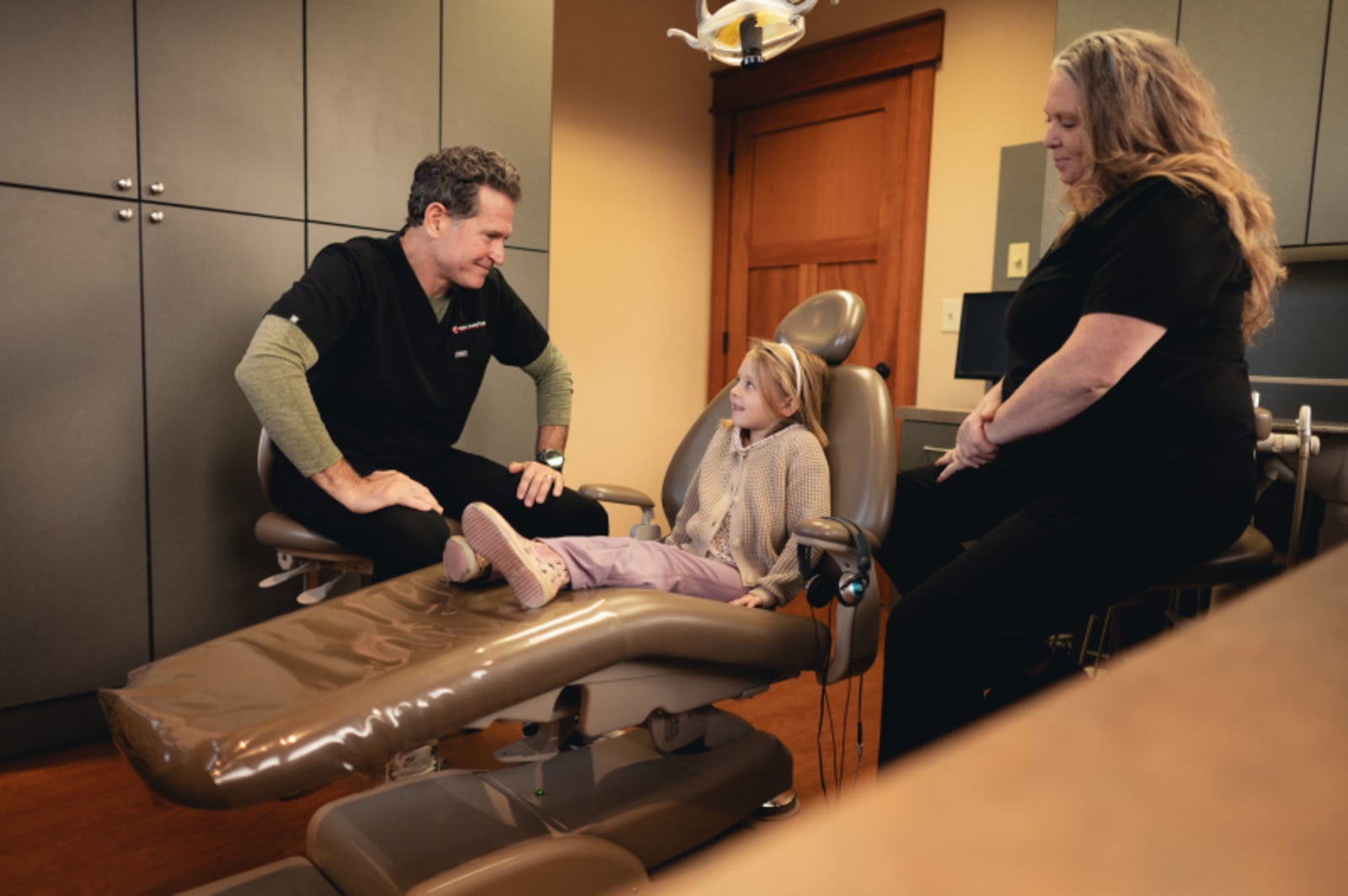
This visit is a real functional assessment, not a quick peek to decide whether braces are coming someday. Here's how it usually goes:
- We listen first. You tell us what you've watched at home: the sleep, the snoring, the morning grogginess.
- We watch the breathing. Whether your child breathes through the nose or mouth at rest tells us a lot about the airway.
- We look at how things are forming. Jaw development, how the upper and lower jaws relate, palate width, and the bite all matter. We bring in cone beam imaging where it helps to see what's happening inside the nose.
- We explain it plainly. You'll leave understanding what, if anything, needs attention, and what your choices are.
Nothing here is rushed, and there's no pressure to commit. Parents often tell us they walked out informed instead of overwhelmed, which is exactly the goal.
Why This Approach Helps Your Child
When the palate is narrow, the airway is usually cramped too. Widening that upper arch at the right age does more than make room for teeth:
- Easier nasal breathing. More room up top makes nose breathing the natural default.
- Deeper sleep. Kids who breathe well at night settle in more fully and wake less often.
- Steadier days. Better sleep tends to show up as sharper focus, calmer behavior, and an easier time at school.
- Straighter teeth with less fuss. Guiding growth early often means less crowding later.
- Gentler treatment down the road. Working with growth instead of against it keeps things simpler.
- The whole child, not just the smile. We care for how your child functions, not how a photo looks.
Is Your Child a Candidate?
A closer look makes sense if you're seeing any of these:
- Mouth breathing during the day or while sleeping
- Snoring, restless nights, or frequent waking
- A narrow palate or visibly crowded teeth
- Trouble focusing, behavior changes, or a rough stretch at school
- Congestion that never fully clears up
- A small or set-back lower jaw
The American Academy of Pediatric Dentistry recommends a first orthodontic evaluation by age 7, while key growth windows are still open. This isn't the right fit for every situation, though. If your child is older and growth has mostly wrapped up, the airway picture still matters, but the path forward may look different. We'll tell you honestly what's realistic for their stage of growth.
Timeline: When to Start and What Comes Next
Wondering whether to act now or wait? It comes down to what's driving the concern. The early school years, roughly ages 6 to 10, are when the palate is still soft enough to guide gently. Early work might include:
- Palate expansion to open up nasal breathing and make space for incoming teeth
- Habit correction for things like thumb sucking or mouth breathing that shape the jaw over time
- Breathing support to settle airway concerns before they add up
An early phase doesn't automatically mean two full rounds of braces. For plenty of kids, helping the foundation develop well early simplifies whatever comes next. A second phase of alignment may still follow once more permanent teeth come in, but it's usually shorter when the early groundwork is solid. Every child develops at their own pace, which is why the first visit is the real starting line.
Preparing for the Visit and Caring for Results
There's not much to do beforehand. The most useful thing you can bring is what you've noticed at home: when the snoring tends to happen, how mornings go, whether your child seems stuffed up a lot, and anything a teacher has mentioned about focus. If your child gets nervous about dental visits, let us know ahead so we can plan around it.
Once treatment is underway, the work is mostly about consistency. If your child has an expander, we'll show you how to adjust and clean it, and we'll track progress at each check-in. Encouraging nose breathing and good habits at home helps the results hold. Because growth keeps going, we watch how things develop so we can make small adjustments early rather than big ones later.
Cost, Insurance, and Financing
Airway orthodontic care isn't one-size-fits-all, so the investment depends on your child's specific needs and where they are in their growth. Early interceptive work looks different from a full phase of treatment, and we won't quote a number sight unseen. We'll walk through everything clearly at your child's first visit, before any decisions are made.
A few things worth knowing as you plan ahead:
- Orthodontic and general dental benefits are often separate, and both can come into play.
- Phasing treatment over time can change how those benefits apply.
- The consultation is where we lay out the full financial picture in plain terms, including the payment options that make care workable for your family.
Why Families in North Idaho Choose Us

Parents who've done their homework usually arrive with one question: does this practice look at the whole child, or just the teeth?
Dr. John is a board-certified, second-generation pediatric dentist who's cared for North Idaho kids for over 20 years, with advanced training in growth, development, and airway-related breathing. He's also a member of the Spokane Cleft Palate Team. A few things that set us apart:
- A kid-focused space built to keep children calm and comfortable
- A conservative, natural philosophy: treat what genuinely needs treating, watch what doesn't
- Solea CO2 laser dentistry that can ease discomfort and support quicker healing
- Airway assessment and advanced imaging that let us see the full picture
- Care that connects oral health to breathing, sleep, and development
Families across Coeur d'Alene and the wider North Idaho region who want someone to see their child as a whole person tend to feel at home here quickly. If that sounds like what you've been searching for, we'd love to show you the difference.
Frequently Asked Questions
How is airway orthodontics different from regular braces?
Traditional orthodontics focuses on straightening teeth and aligning the bite. Airway-focused care steps back first and asks how the jaws are developing, whether the airway has enough room, and how breathing is shaping growth. We're after the root cause, not just tooth position.
My child is 7. Is it too early to start?
Seven is a common age for a first evaluation, precisely because key growth windows are still open. An early look doesn't always mean early treatment, but it lets us spot patterns that are far easier to guide now than later. You can learn more about Dr. John before you come in.
Will my child still need braces later if we treat early?
Sometimes yes, sometimes no. Early work can cut down the complexity of later treatment, and once in a while it removes the need entirely. We'll tell you what's realistic for your child specifically rather than promising one or the other.
Does insurance cover airway-focused orthodontic treatment?
Coverage varies by plan and how treatment is coded. We go through the full financial picture together at the first visit, including how orthodontic and general benefits might apply.
How do I tell an airway issue from just crooked teeth?
The difference is really visible versus functional. Crooked teeth are something you can see in the mirror. An airway issue shows up in how your child functions day to day, especially in how they breathe and sleep, so it's easy to miss if you're only watching the teeth. A full evaluation looks at both, since the two are so often connected.
Does jaw expansion hurt?
Most kids feel some pressure when an expander is first placed or adjusted, but it's usually mild and short-lived. We'll show you what to expect and how to keep your child comfortable through it.
Ready to Talk About Your Child's Airway?
If you've been connecting the dots between your child's sleep, breathing, and growth, you're asking important questions. An airway evaluation gives us an opportunity to look more closely at those concerns, understand what may be contributing to them, and determine whether further evaluation or treatment could be helpful. We take a thoughtful, individualized approach so you can better understand your child's needs and your options moving forward.
Call us at (208) 667-3556 to schedule your child's airway evaluation at our Coeur d'Alene office. We're here to answer your questions and help you take the next step with confidence.
Connect with us
Call 208.667.3556 or request an appointment online to set up your first visit. We’ll be in touch soon.